

- What are the perks of having organized public transport? Being able to travel anywhere you want without needing a car. Not to mention durability, nature friendly and healthy.
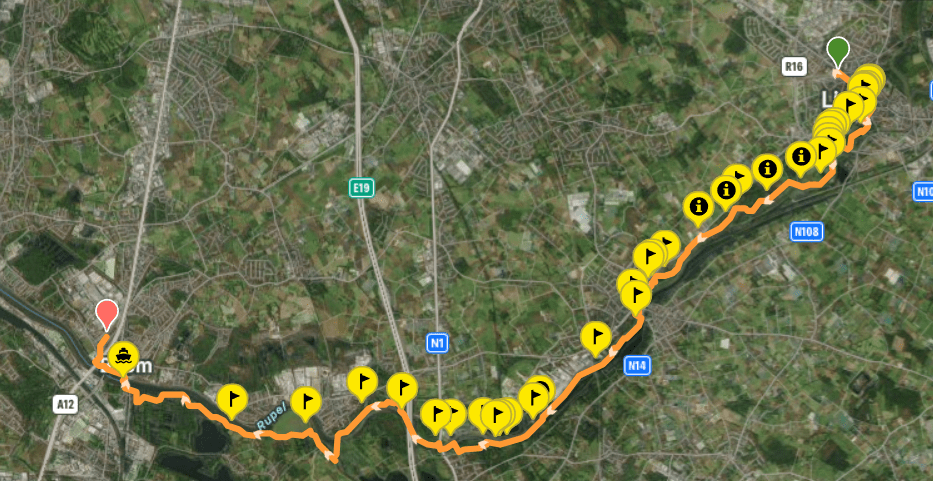
- In the Netherlands and Belgium (but also France, Switzerland, Germany, Luxembourg and UK) hikers can organize a train hike. You travel by train to a destination and walk to another train station. Usually these hikes vary between 10 and 20mi.
Railway history of Belgium
Belgium was heavily involved in the early development of railway transport. Why?
Well, Belgium had one of the most industrialized regions on continental Europe, Wallonia* (mines and quarries) and, perhaps even more influential, Belgian’s first king Leopold was Queen Victoria’s uncle (same royal house of Saxe-Coburg-Saalfeld). England obviously led the industrial revolution.
Since Belgium got its independence from the Netherlands in 1830, and if you have read some of my hiking adventures, you may have noticed that Belgian border markers bearing the year 1843 on them, you may notice they were not so much on speaking terms.
Well, the Netherlands’ port of Rotterdam and Belgian’s port of Antwerp, still number one and two of Europe, needed transportation routes. Line 12 opened in June 1854 from Antwerp Central Station (iconic station was only built about fifty years later though) to Lage Zwaluwe, where the train boarded a ferry boat to Rotterdam.
Train hikes origins
Since the railway network is so extensive, it has been an easy mode of transportation. At least every hour you can expect a train in both directions. Train stations (at least in Belgium and the Netherlands) are on average about 6miles apart and often less. Besides trains, cities do have trams/metro lines and rural areas even have frequent bus service. In the Netherlands you will hear about OV stappers (OV as in public transport). You can easily travel to any destination nearby parks, trails, etc.
According to my AI search, 82% of Belgians live within a 3.1mi from a train station. Fairly easy to walk, cycle or even drive to a station to commute. In the Netherlands 2/3rd live within the same radius. The Netherlands have more areas that are (not more car-centric) but were never on “important” trade routes.
The first registered train hike is remembered as “Walking the Line” on 1 May 1861 to inspect the railway line from London to Brighton (54mi). Not sure if Johnny Cash knew about this event.
In Belgium the first train hike was organized to inspect the progress of the construction on the first railway line between Brussels and Mechelen (11mi) in 1835. The Netherlands had the Haarlemmerlijn (12mi) in 1839.
Obviously people walked much more then and travel was reserved for the wealthy. Also, these walks were performed by railway employees (engineers and inspectors) to guarantee safety. For the common people these hikes helped to accept trains and make people aware of the new technology. Imagine people complaining about safety and dangerous speed of trains going at 25mi/h.
Evidently walking was the main (if not the only) option for most people to get from point A to point B. These first registered train hikes were part of the job for engineers and train personnel.
Train hikes became hugely popular during the pandemic.
Best train hikes
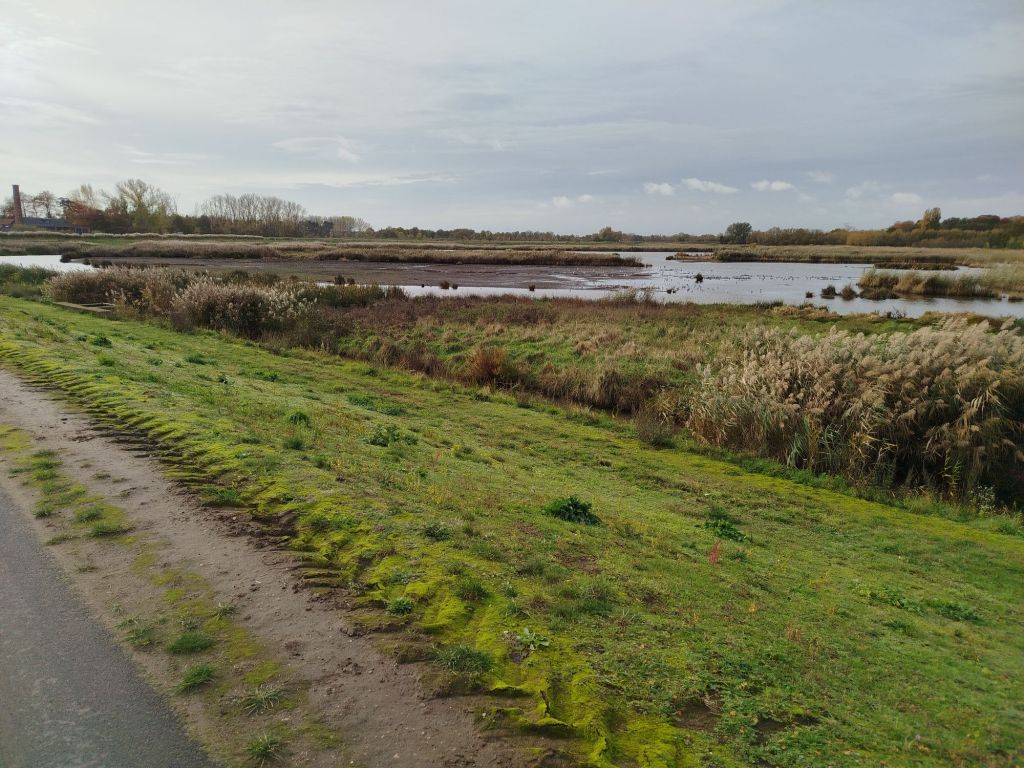
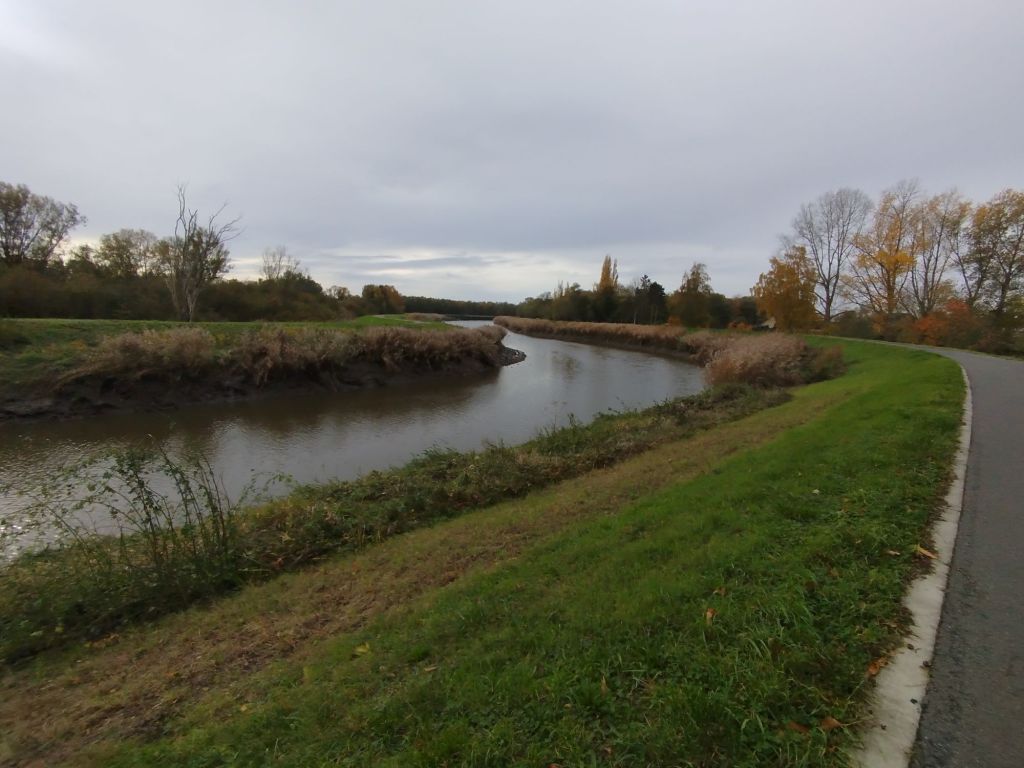
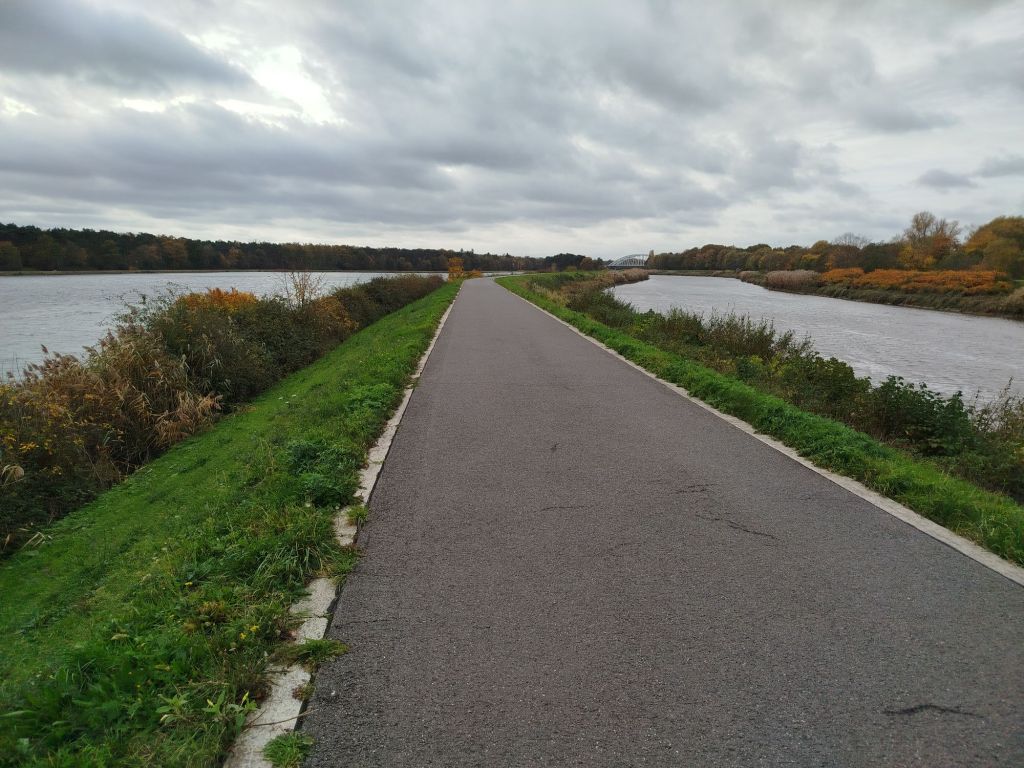
De gustibus non est disputandum (you cannot argue about taste), sure, especially since most train stations are located in town and city centers. I rather hike surrounded by trees, heather, dunes, you get the idea than surrounded by bricks and people. I can however appreciate old city centers. And by old, I mean medieval, whenever it gets to industrial revolution times, I lose interest. So basically, I travel to small towns or medium cities and venture out into nature asap.
I do realize people being interested in architecture, statues, food and culture. There are train hikes to satisfy their every need. So be careful when blindly choosing a train hike. I did once walk the only city GR in Flanders in Antwerp. Starting in train station Antwerp-Berchem (about 15mi). The hike focuses on the green areas in the city but it cannot compete with the real deal (rural train hikes).
Links and further info
Public transport hikes Netherlands: https://www.wandelnet.nl/ov-stappers OR https://www.wandelnet.nl/ns-wandelingen
Belgian train hikes: https://www.groteroutepaden.be/en/walking/gr-routes/from-station-to-station
Also books have been published but I am afraid not translated into English.
* Did you know Wallonia is now considered the poorest part of Belgium? The region is also responsible for uranium used in the atomic bombs dropped on Hiroshima and Nagasaki. They knew it might one day be “valuable” and hence stored it. Another source of uranium are mines in the former Belgian colony of Congo. Since Congo only became independent in 1960, the uranium undoubtedly made some Belgians rich.
Also, if you fly into Belgium and opt for “Brussels South airport” you will land in Charleroi, nicknamed “La Ville Noire” (The Black City) for its history in coal mining and pollution. Charleroi is 42 miles south of Brussels.




 Celtic Belgae